Ideal Battery for 1.0, 1.6, and 2.0 Cars: Differences and Recommendations
Choosing the correct battery for a 1.0, 1.6, or 2.0 car goes far beyond engine displacement. Although engine size influences the starting demand, the vehicle’s total electrical consumption is the most determining factor when selecting the ideal battery. That is why two cars with the same engine size may use different batteries, while vehicles with different engines may share the same specification. In this article, you will understand which criteria truly matter when choosing the correct battery and how to avoid mistakes that compromise electrical stability and the lifespan of the system.

Does Engine Displacement Define the Car Battery?
No. Engine displacement alone does not determine the correct battery.
It influences the torque (moment of force) required for starting, but the vehicle’s total electrical consumption depends on factors such as:
- Electrical system design
- Number of electronic modules
- Onboard technology
- Presence of a Start-Stop system
- Vehicle weight
- Daily usage profile
For this reason, vehicles with the same engine size may use different batteries, while cars with different engines may share the same specification.
The Influence of Engine Size on Starting Demand (CCA)
Engine size directly impacts the Cold Cranking Amps (CCA) required to overcome engine compression at the moment of ignition.
Larger engines, such as 2.0L engines, require greater starting torque and therefore higher CCA. However, the evolution of downsizing engines (smaller engines with higher efficiency) has created an important scenario: 1.0L turbo engines may require CCA similar to naturally aspirated 1.6L or 2.0L engines.
For this reason, analyzing CCA should take priority over engine displacement alone, a concept explained in the article about what CCA means in a battery.
Technical Reference of Average Demand
| Engine | Estimated Requirement (Ah) | Suggested CCA |
|---|---|---|
| 1.0 Naturally Aspirated | 45Ah to 50Ah | 340A to 400A |
| 1.0 Turbo / 1.6 | 50Ah to 60Ah | 440A to 510A |
| 2.0 / 2.4 | 60Ah to 75Ah | 520A to 680A |
These values vary depending on the vehicle’s design and onboard electronics.
Onboard Electronics and the Importance of Reserve Capacity
The electrical complexity of a modern vehicle often surpasses the influence of engine size. A current 1.6 vehicle equipped with electric steering, advanced multimedia systems, and multiple control modules may demand more from the battery than a previous-generation 2.0 vehicle.
In these cases, Reserve Capacity (RC) becomes a critical factor. It ensures that even at idle or with the engine turned off, the system voltage remains stable.
When RC is insufficient, situations such as the following may occur:
- Frequent deep discharges
- Accelerated reduction in battery lifespan
- Intermittent failures in electronic modules
This behavior is directly related to situations where the battery drains quickly, even without an apparent defect.
The Impact of the Start-Stop System on Battery Choice
Regardless of whether the engine is 1.0, 1.6, or 2.0, the presence of a Start-Stop system completely changes the battery technology required.
Vehicles with Start-Stop perform dozens of additional starts per day and rely on the battery to keep all systems active during temporary engine shutdowns.
In these cases:
- Conventional batteries are not recommended
- The correct technologies become EFB or AGM
The differences between these technologies are explained in the content about AGM and EFB batteries, helping to avoid common application mistakes.
Risks of Undersizing the Battery
Installing a battery with lower capacity based only on engine displacement is a frequent technical mistake. A classic example is installing a 45Ah battery in a vehicle that originally requires 60Ah, assuming that the engine is “only a 1.6”.
This mistake can lead to:
- Excessive charge and discharge cycles
- Accelerated plate sulfation
- Voltage regulator overload
- Reduced battery lifespan
These effects directly impact how long an automotive battery lasts and affect the entire charging system.
How the Tudor Line Serves 1.0, 1.6, and 2.0 Cars
The Tudor battery line was developed to meet different levels of electrical demand, going beyond engine displacement.
Conventional Tudor Batteries
The Leve automotive line is recommended for vehicles without Start-Stop systems, offering high CCA and good reserve capacity.
Tudor EFB Batteries
The EFB automotive line is recommended for vehicles with standard Start-Stop systems and intensive urban use, providing greater cyclic resistance.
Tudor AGM Batteries
The AGM automotive line is recommended for vehicles with high electrical demand, offering maximum stability, vibration resistance, and fast recharge capability.
This variety allows compliance with the vehicle’s technical specifications and helps preserve the integrity of onboard electronics.
In summary, the best battery for 1.0, 1.6, or 2.0 cars is the one that balances starting power, electronic support, and usage profile, according to the vehicle’s original design.
Engine displacement is a starting point, but it should not be the only criterion. Evaluating CCA, reserve capacity, battery technology, and real usage conditions is essential to avoid failures and premature wear.
With the correct specification and proper technical guidance, the electrical system operates in a stable and predictable way. Tudor offers solutions compatible with these criteria, ensuring performance and protection for vehicles with different engine sizes.
To continue learning about automotive batteries and understand which model is most suitable for your vehicle, visit the Tudor blog and explore other technical content.
If you still have questions, Tudor’s specialized technical support can help guide you in choosing the ideal battery for your vehicle.
Read also

What happens when a car sits unused for a long time?
Not every vehicle is driven long distances every day. Many people own a second car, use their vehicle only on weekends, or leave it unused during extended trips. Although this situation may seem harmless, long periods without use can directly affect the automotive battery. Even with the engine turned off, some vehicle systems continue to consume power, and the battery itself naturally loses charge over time. If this period is prolonged, the risk of discharge, sulfation, and reduced service life increases significantly. Understanding what happens when a car remains unused for a long time helps preserve the battery and avoid surprises when it is time to use the vehicle again.
Continue reading
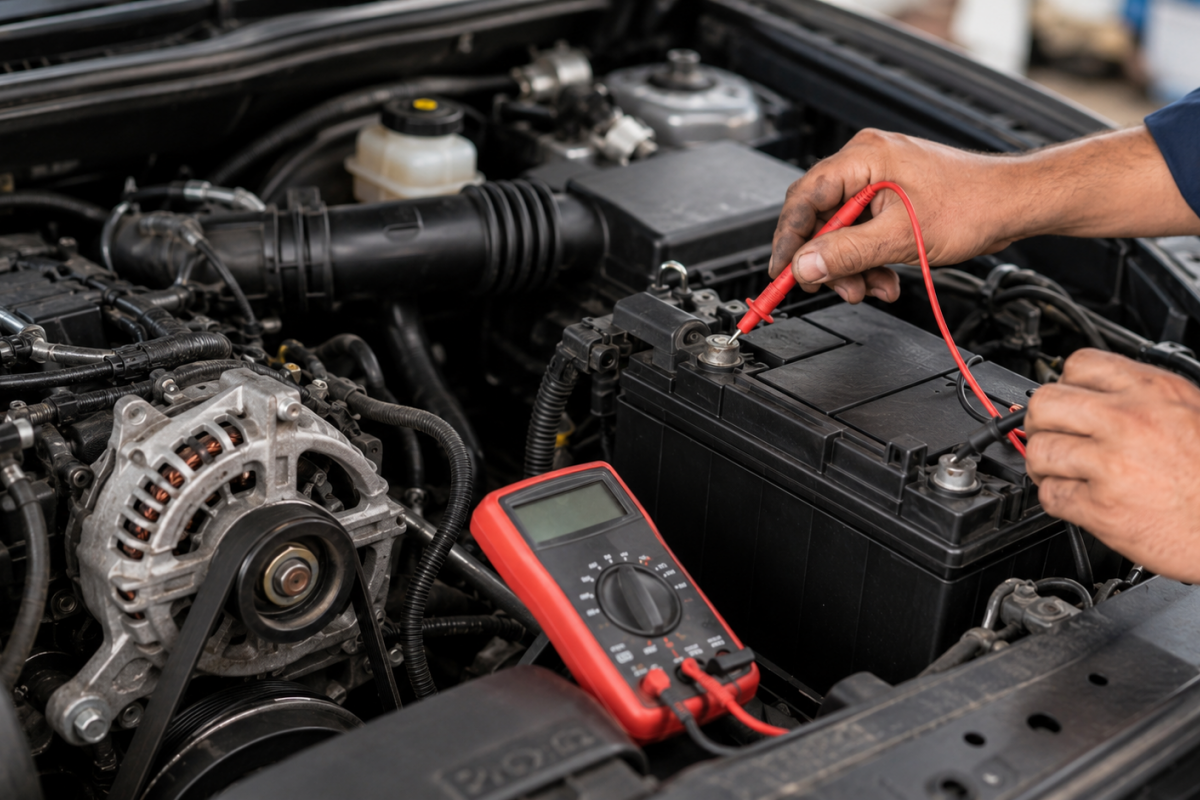
Automotive battery and alternator: what is the relationship between them?
It is common for a driver to experience difficulty starting, find the battery dead, and quickly conclude that it is time to replace it. However, the problem is not always the battery. The battery and the alternator work together to keep the vehicle's electrical system running correctly. When one of these components fails, the other ends up being affected as well, which can generate very similar symptoms and make diagnosis difficult. Therefore, understanding how the battery and alternator work together is essential to identify the source of possible failures and ensure that the electrical system operates safely and efficiently. When the battery needs to be replaced, it is also important to check whether the charging system is operating correctly to preserve the performance of the new component.
Continue reading

How temperature influences the useful life of the automotive battery
The automotive battery is constantly exposed to different environmental conditions. In some regions, intense heat predominates for much of the year. In others, lower temperatures become a challenge for the vehicle's electrical system. Although many drivers associate battery problems only with usage time, temperature is one of the factors that most influences its durability and performance. Both excessive heat and intense cold affect the chemical reactions that take place inside the battery, accelerating wear processes and reducing its ability to supply energy.
Continue reading