Boat battery: a practical guide to choosing correctly
Choosing a boat battery requires more than finding a similar model for the vessel. To make the right choice, you need to check dimensions, capacity, terminal position, and the correct application for marine use.
This makes a difference because a boat operates in a more demanding environment, with humidity, vibration, and variation in electrical demand. In addition to starting the engine, in many vessels the battery also needs to power onboard equipment, which makes the correct choice even more important.
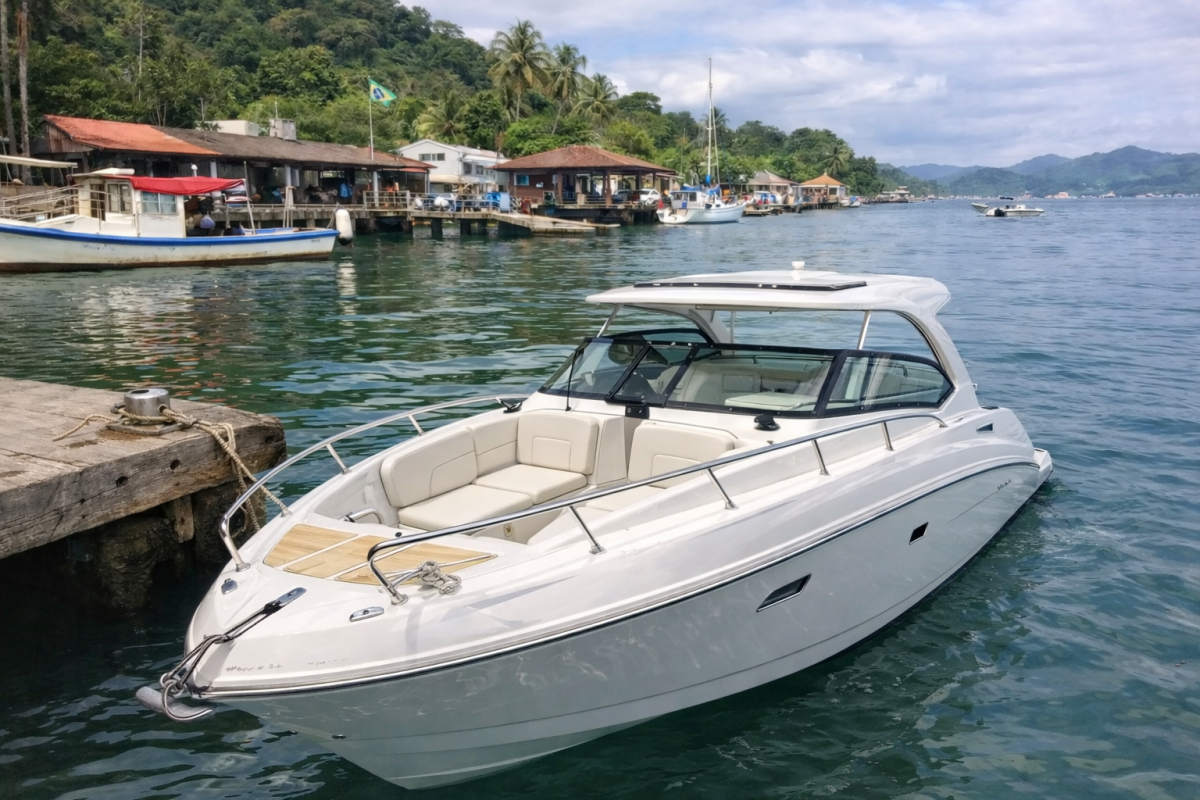
What should you evaluate when choosing a battery for a boat?
The main point is to check whether the battery is compatible with the model and the equipment’s electrical requirements.
- Capacity in Ah (C20): Indicates the total stored energy. For boats with many electronics, such as GPS, sonar, sound system, and bilge pumps, capacities from 105Ah to 220Ah are the most recommended.
- Starting Current (CCA): Essential for sterndrive or high-displacement outboard engines. Tudor offers models with up to 1200A CCA, such as the TNF220D, ensuring instant ignition even in adverse conditions.
- Reserve Capacity (RC): This is the vital indicator for those who like to enjoy the boat while stopped with the sound system and lights on. It measures how long the battery can sustain the system without the engine charging it.
- Terminal Type: In boats, the standard is the Marine Terminal, present in models from TNF75E to TNF220D, which combines the standard conical pole with a stainless steel screw, W 3/8", allowing firm connections that do not loosen with wave impact.
Capacity in Ah and Reserve Capacity (RC)
Many users focus only on amperage, Ah, but in marine applications, Reserve Capacity, RC, is just as important.
| Model | Capacity (Ah) | Reserve Capacity (RC) | Usage Differential |
|---|---|---|---|
| TNF90E | 90 | 170 min | Small/medium boats with basic electronics. |
| TNF105D | 105 | 190 min | Ideal balance for leisure boats with sound system and GPS. |
| TNF150D | 150 | 280 min | Vessels with overnight stays and greater service demand. |
| TNF220D | 220 | 420 min | Large boats and yachts, starting and service bank. |
If the installed capacity is lower than the demand of the accessories, the battery will undergo constant deep discharges, which drastically reduces its service life, even if it is a deep-cycle battery.
Should starting current also be considered?
Yes. Starting current is essential for engine activation.
Even with the correct capacity, a battery with insufficient current delivery may have difficulty starting, especially in vessels that require quick response and reliable operation. That is why the choice should not look only at Ah.
In practice, the battery needs to meet both points well: energy reserve and starting performance.
This care connects with the understanding of battery performance, since many signs of power loss appear precisely at the time of starting.
Do size and terminal position make a difference?
Yes, a lot.
The battery needs to fit correctly in the boat’s compartment and respect the position of the poles. When this does not happen, there may be stress on the cables, improper installation, and even poor contact.
Before replacement, check:
- Length, width, and height
- Mounting base
- Position of the positive and negative poles
- Terminal type
This care is basic, but it avoids common compatibility errors.
Which type of battery is usually most recommended?
In general, batteries with construction suitable for the marine environment and good resistance to vibration and humidity are usually the most recommended.
In a boat, the battery operates exposed to more severe conditions than in land applications. Therefore, the marine application must be respected. This type of choice helps improve starting reliability and preserve performance throughout use.
If you want to better understand this difference, it is worth going deeper into the topic of marine battery.
Which mistakes should be avoided when choosing?
The most common mistakes involve adaptation and purchase decisions based only on appearance or price.
In practice, it is worth avoiding situations such as:
- Using a battery just because it “seems to fit”
- Ignoring the position of the terminals
- Choosing a capacity different from the recommended one
- Disregarding the dimensions
- Installing a battery unsuitable for the marine environment
These mistakes can reduce battery service life and compromise boat operation.
How to increase the durability of the boat battery?
Durability depends on the correct choice and usage care.
Since the boat may remain stopped for periods of time, the battery needs attention so it does not lose excessive charge. In addition, keeping the terminals clean, ensuring correct fastening, and protecting the installation help with performance.
Some important precautions are:
- Avoid long periods without recharging
- Check cables and terminals
- Avoid oxidation
- Keep the battery securely fastened
- Follow the recommended application
This point is also related to marine battery durability care.
Why is Tudor Náutica Technology superior for boats?
Tudor Náutica batteries are developed with specific technologies to overcome the challenges of the marine environment, offering greater durability and reliability. Their differentials include:
- Diamond-Shaped Grids: The negative plates feature a diamond-shaped design that improves active mass adhesion and electrical conductivity. This results in greater corrosion resistance and extended service life, even under constant vibration.
- Structured Positive Plates: Manufactured with high-quality lead and special additives, these plates offer high resistance to discharge and recharge cycles, maintaining starting and service capacity for longer.
- Polyethylene Envelope Separators: They contribute to low electrical resistance and controlled microporosity, optimizing ionic exchange and battery performance.
- Copolymer Polypropylene Plastic Case: Ensures high resistance to impacts and vibrations. The cover incorporates labyrinths and a double flame-arresting filter, increasing safety in confined environments.
- Maintenance-Free: Sealed technology eliminates the need to add water, providing greater convenience and safety for the user.
- Dual Terminals: The presence of screw-type terminals, eyelet, and conical terminals allows multiple and more robust connections, essential for resisting vessel vibrations.
- Charge Indicator: Allows checking the battery’s health without the need for a multimeter at first.
Conclusion
Choosing the right battery for a boat involves simple but important criteria: capacity, starting current, dimensions, terminals, and correct application. When these specifications are respected, the tendency is to have more reliable starting, better performance, and greater durability.
In the case of a boat, the choice also needs to consider the demand of onboard equipment, not just the engine. More than looking for a similar model, the ideal approach is to compare the battery with the specification indicated for the vessel and avoid adaptations.
To better understand Tudor’s options for marine applications, it is worth consulting the brand’s catalog. In case of doubts about compatibility, seeking guidance from a specialist can help define the most suitable battery for the model.
Frequently asked questions about boat batteries
Can I use any battery in a boat?
No. The battery needs to be compatible with the vessel, with the correct dimensions and marine application.
Does the boat battery need to power only the start?
Not necessarily. In many boats, the battery may also power onboard equipment, which influences the choice of the correct capacity.
What most commonly causes mistakes when choosing a battery?
The most common mistakes are incorrect dimensions, wrong terminal position, inadequate capacity, and choosing a battery outside the recommended application.
Read also
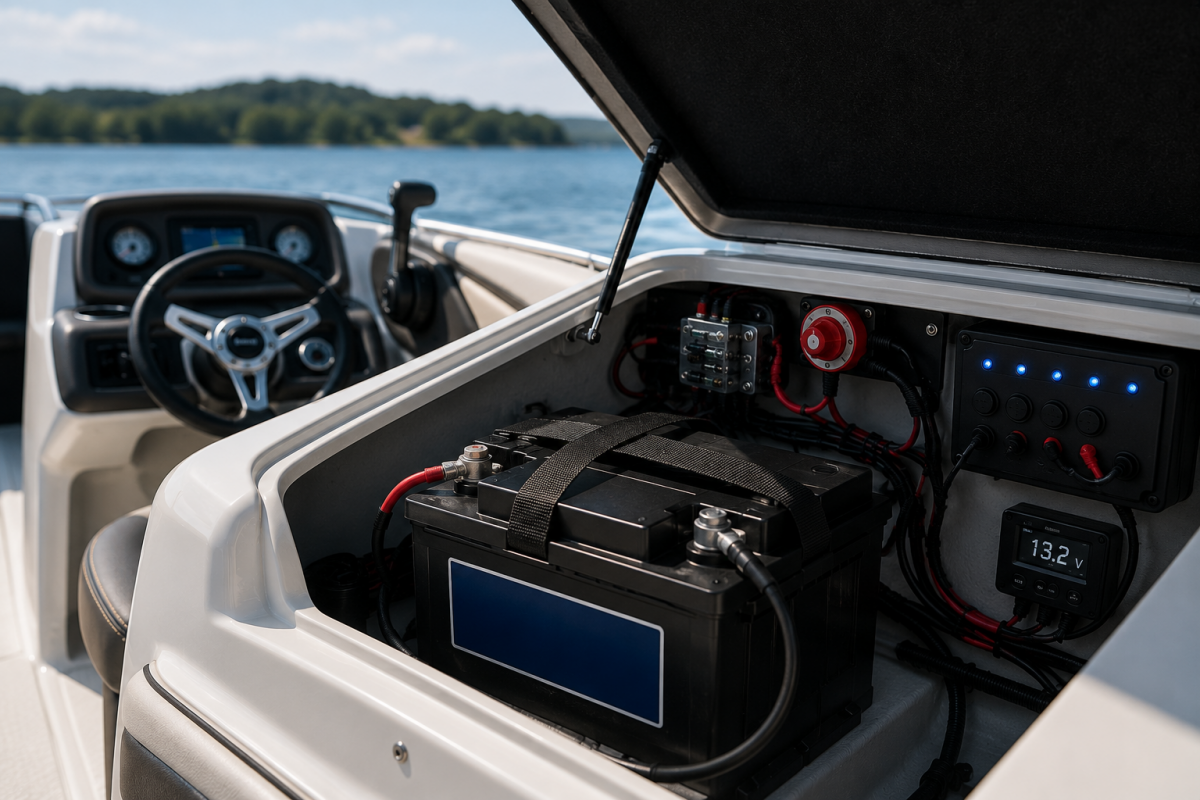
What is a deep-cycle marine battery and when is it recommended?
Not every marine battery performs the same function. While some are designed to deliver a high current when starting the engine, others are designed to power electrical equipment for long periods, whether the vessel is underway or anchored. This is where the deep-cycle battery stands out. Its construction was developed to withstand successive discharge and recharge cycles, providing continuous energy for systems that require autonomy during navigation. In this article, you will understand what characterizes a deep-cycle marine battery, when it is recommended, and why choosing the correct application makes all the difference to vessel performance.
Continue reading
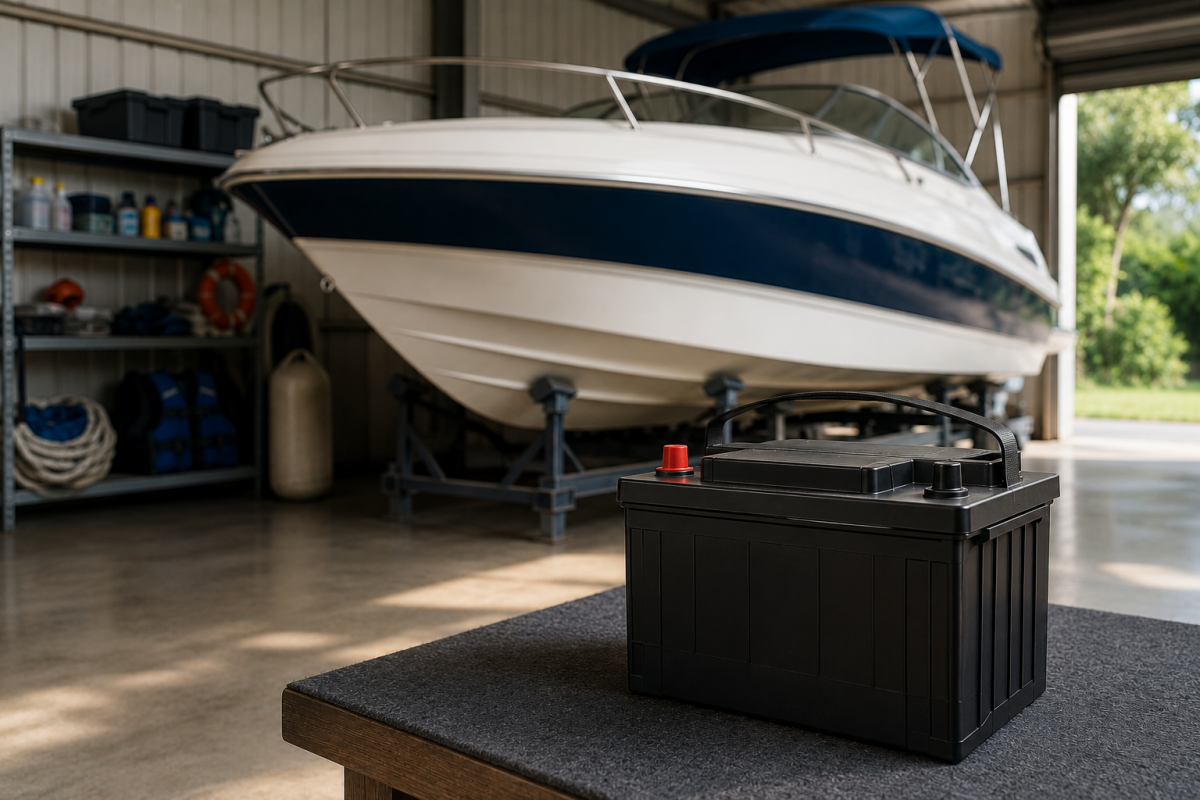
How to store a marine battery during the off-season
Not every vessel remains in use throughout the year. In many cases, boats, motorboats, and sailboats remain idle for weeks or even months during the off-season, whether due to weather conditions, maintenance, or less frequent navigation. Although this period of inactivity is common, it requires some care with the battery. When stored without proper maintenance, the battery can naturally lose charge, undergo internal degradation processes, and have difficulty operating the next time the vessel is used. The good news is that a few simple measures help preserve battery performance during this period, extending its service life and reducing the risk of unexpected problems when it is time to return to the water.
Continue reading
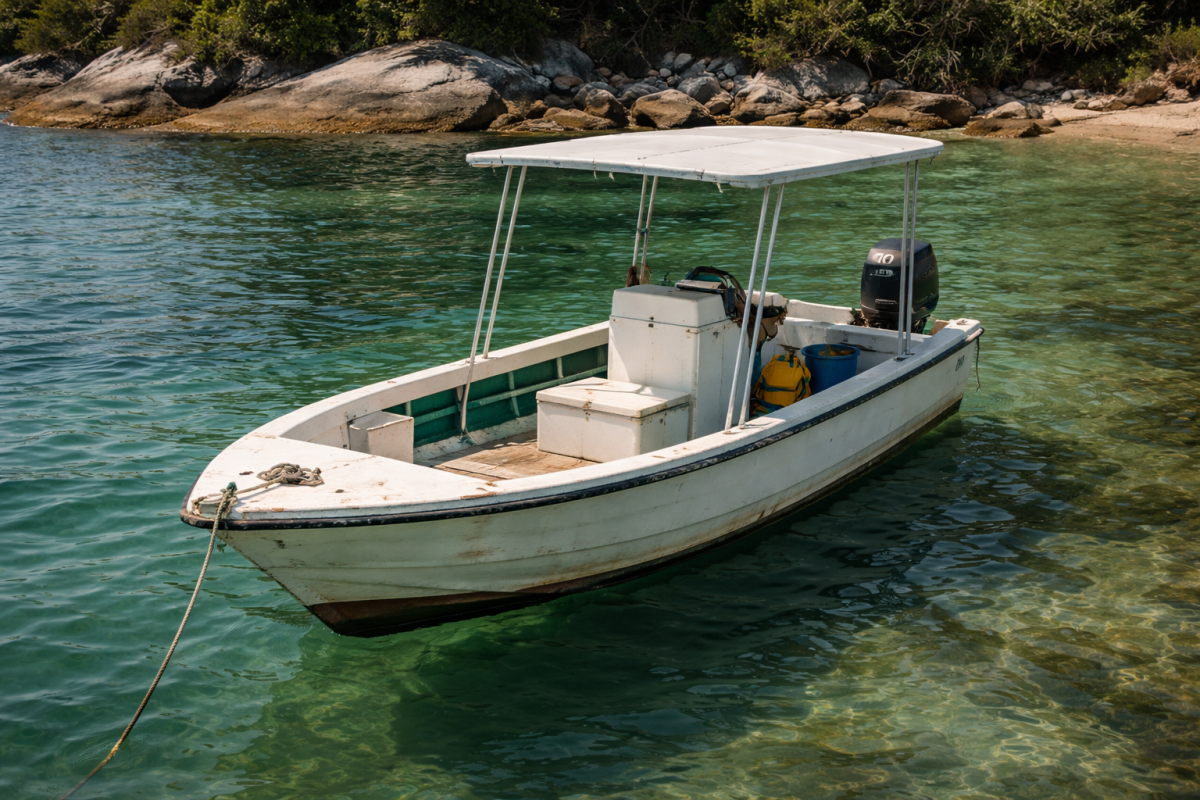
Tips for small boat batteries
Small boat batteries need to be chosen carefully to ensure reliable starting, stable power supply for equipment, and good durability. Even in smaller vessels, the battery may operate under humidity, vibration, and load variation, which requires the correct application. More than simply looking at the size of the boat, it is important to consider the type of use, the installed accessories, and the capacity required for the electrical system.
Continue reading